
Web Development
Custom websites built with modern frameworks like Next.js. Engineered for traditional SEO and Generative Engine Optimization (GEO), your site is built to be discoverable by both Google and AI search engines like ChatGPT.
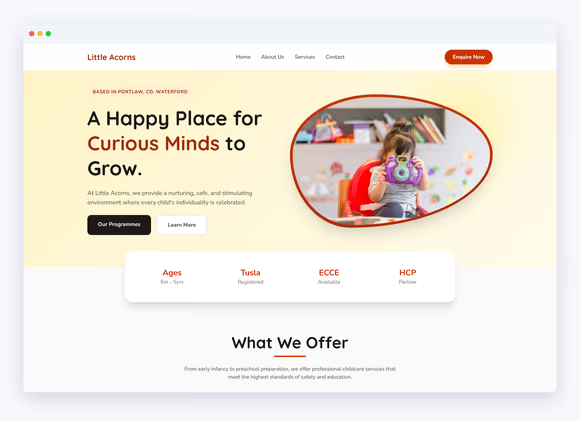
An independent design concept for Little Acorns, a crèche. The design presents childcare programmes (from early infancy through preschool years) with a child-centric, vibrant colour palette. Built with a mobile-first approach, it shows how local parents could easily find opening hours, scheme eligibility, and get in touch instantly.
Custom websites built with modern frameworks like Next.js. Engineered for traditional SEO and Generative Engine Optimization (GEO), your site is built to be discoverable by both Google and AI search engines like ChatGPT.

Fast, offline-ready mobile apps built directly for iOS and Android at a fraction of native app store costs.
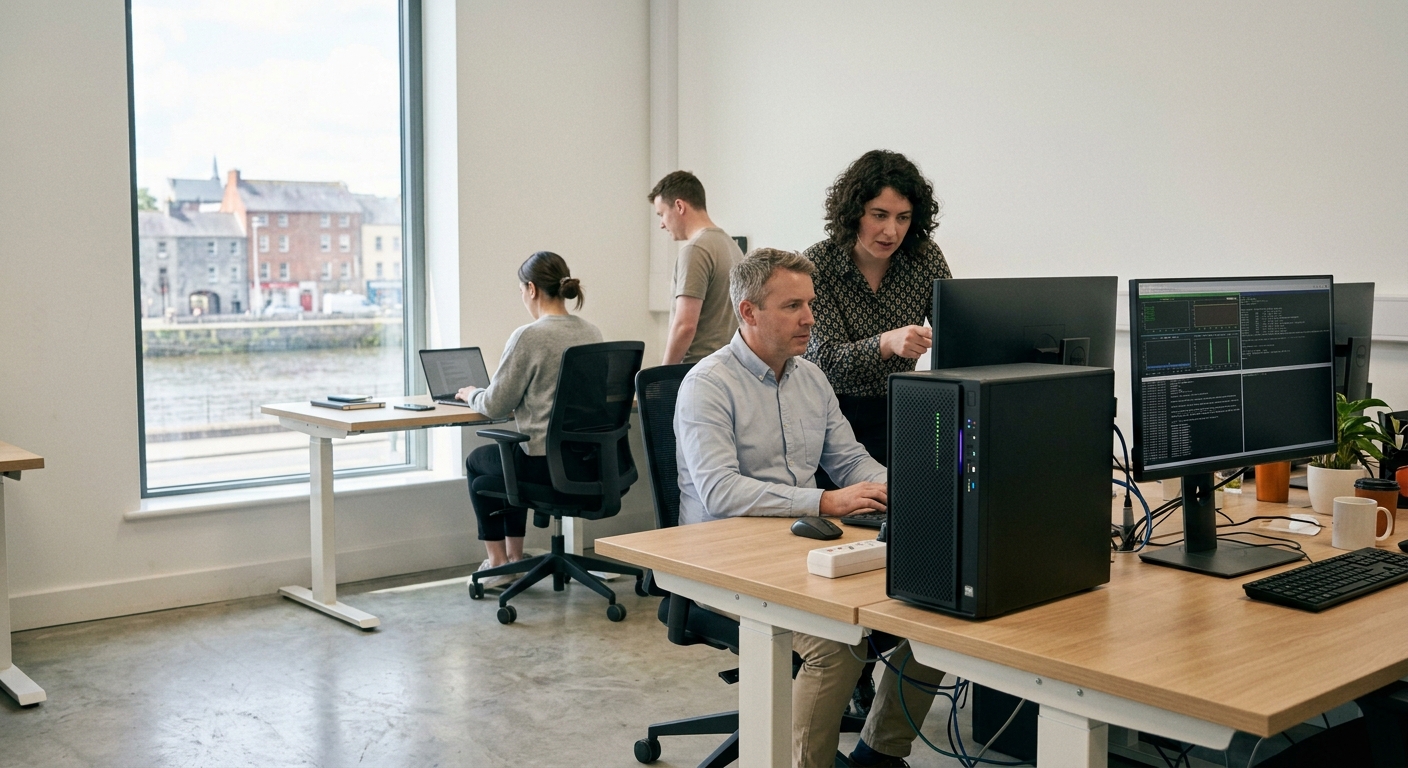
Private, on-premise AI for Waterford businesses — open-weight models set up on your own hardware so client data never leaves the building, with no ongoing subscription.
Sub-second load times & top SEO
Offline-ready mobile apps
On-premise AI with zero subscriptions
Web development, mobile app trends, and local digital strategy insights from Waterford.

Pasting client bank statements and Revenue letters into consumer AI chatbots creates serious GDPR exposure. Why South East tax practices are running private models on-premise.

A website presents information, while a mobile web app lets customers and staff book, manage accounts, and search databases. How to choose the right fit for your Carrick-on-Suir business.
Fast-loading websites rank significantly higher on Google, keep potential customers engaged, and reduce bounce rates. A high-performance website ensures visitors stay on your site and convert into paying customers.
John Riordan builds websites engineered for rapid load speeds and clear customer conversions. This is achieved through lean code, modern image compression (like AVIF), lightweight scripts, and clean mobile architectures. The aim is to deliver a smooth user experience while minimising data consumption and securing top Lighthouse scores.
Based in Waterford, I partner with local shops and commercial businesses across County Waterford and neighbouring communities to deliver fast, search-optimised websites.
Covering Waterford City along with Portlaw and nearby districts.
Fast, mobile-friendly websites designed for businesses in Tramore and surrounding coastal communities.
Dedicated web development & digital solutions for small businesses and trades in Carrick-on-Suir.
Looking for a local web developer near you? Whether you're based in Waterford City, Tramore, Carrick-on-Suir, or anywhere in the South East, I provide in-person initial consultations and ongoing local support.